
Green coffee · Origins
Ten origins, one Coffee Belt.
Where a coffee grows decides how it tastes. Altitude, climate, soil and the way the cherry is processed give every origin its own character. Travel the Coffee Belt with Maryam, climb the mountain, and find the origins that match your taste.
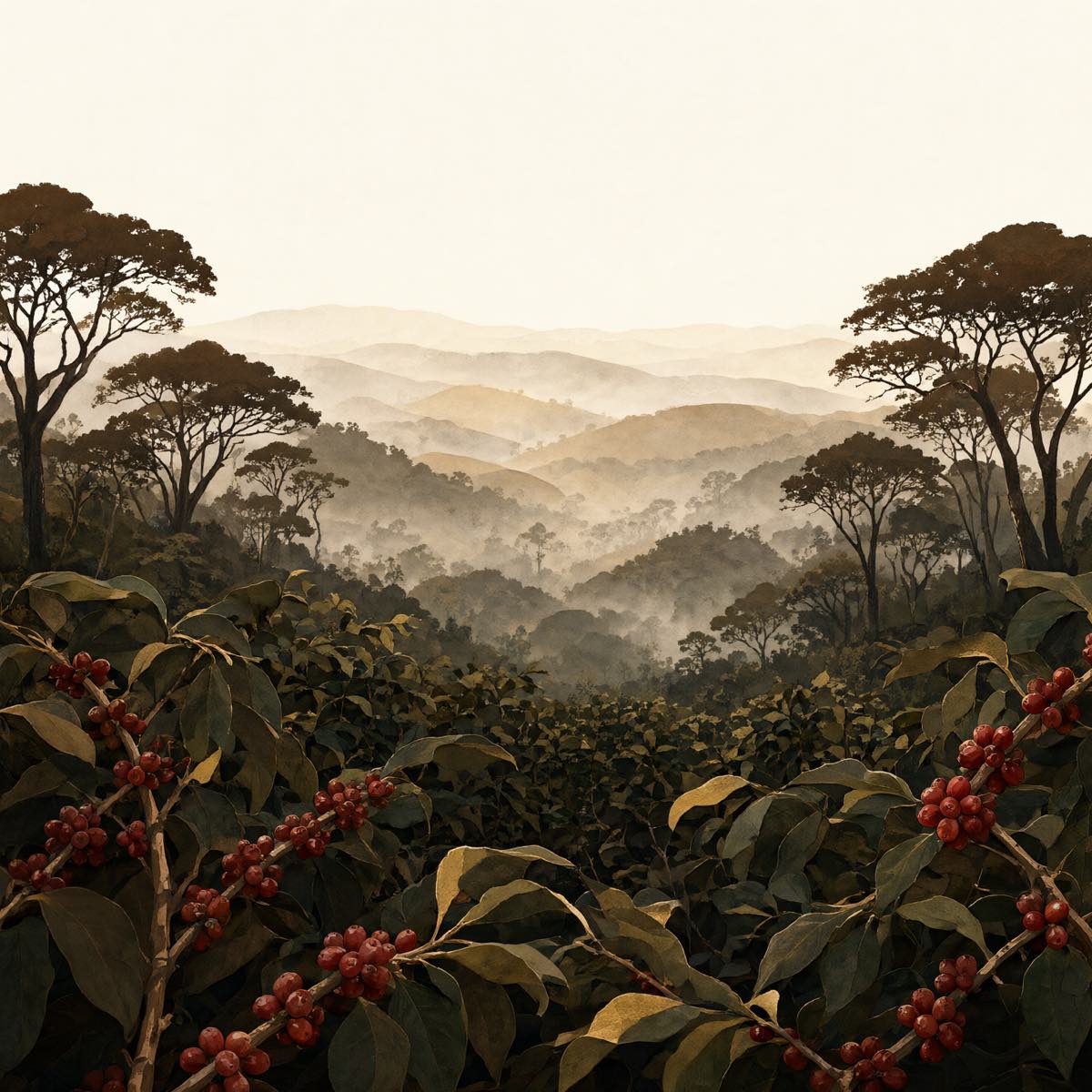
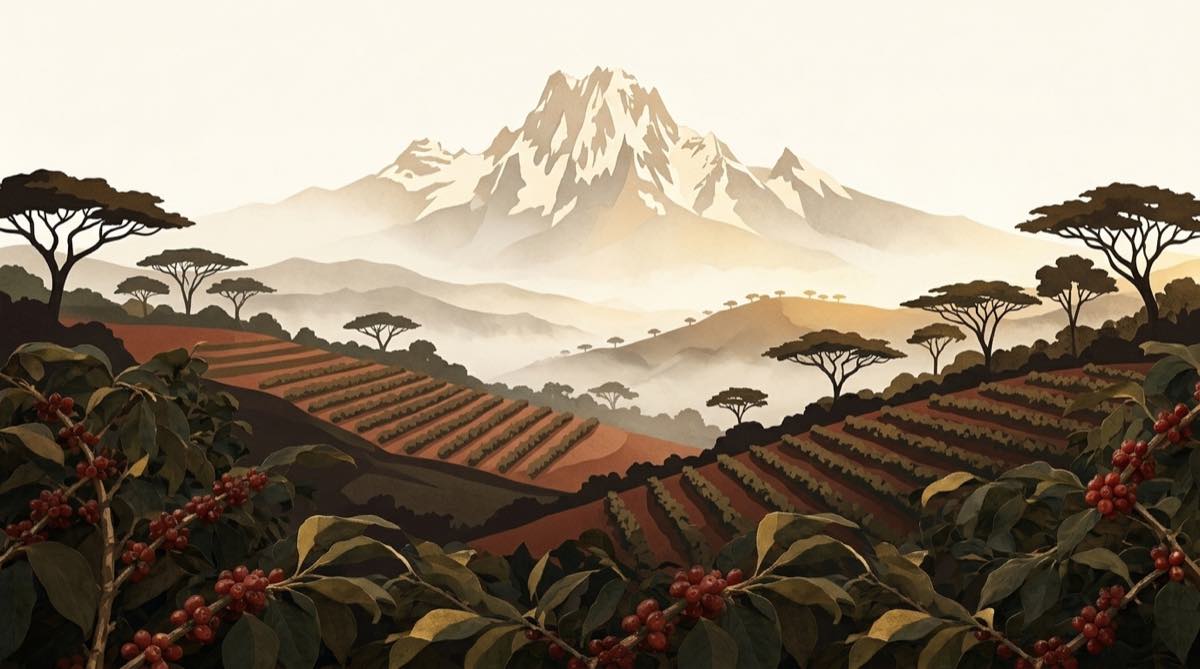
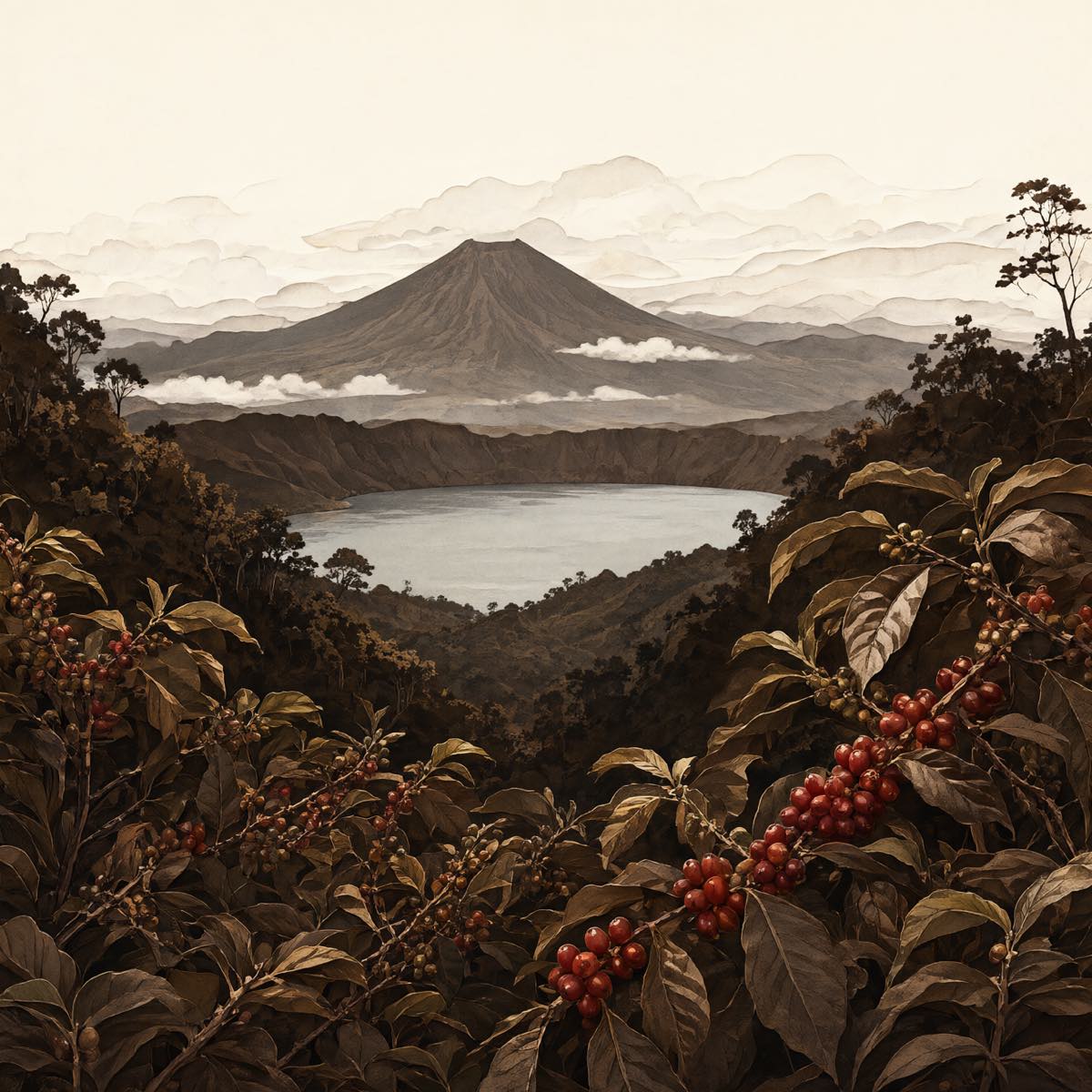
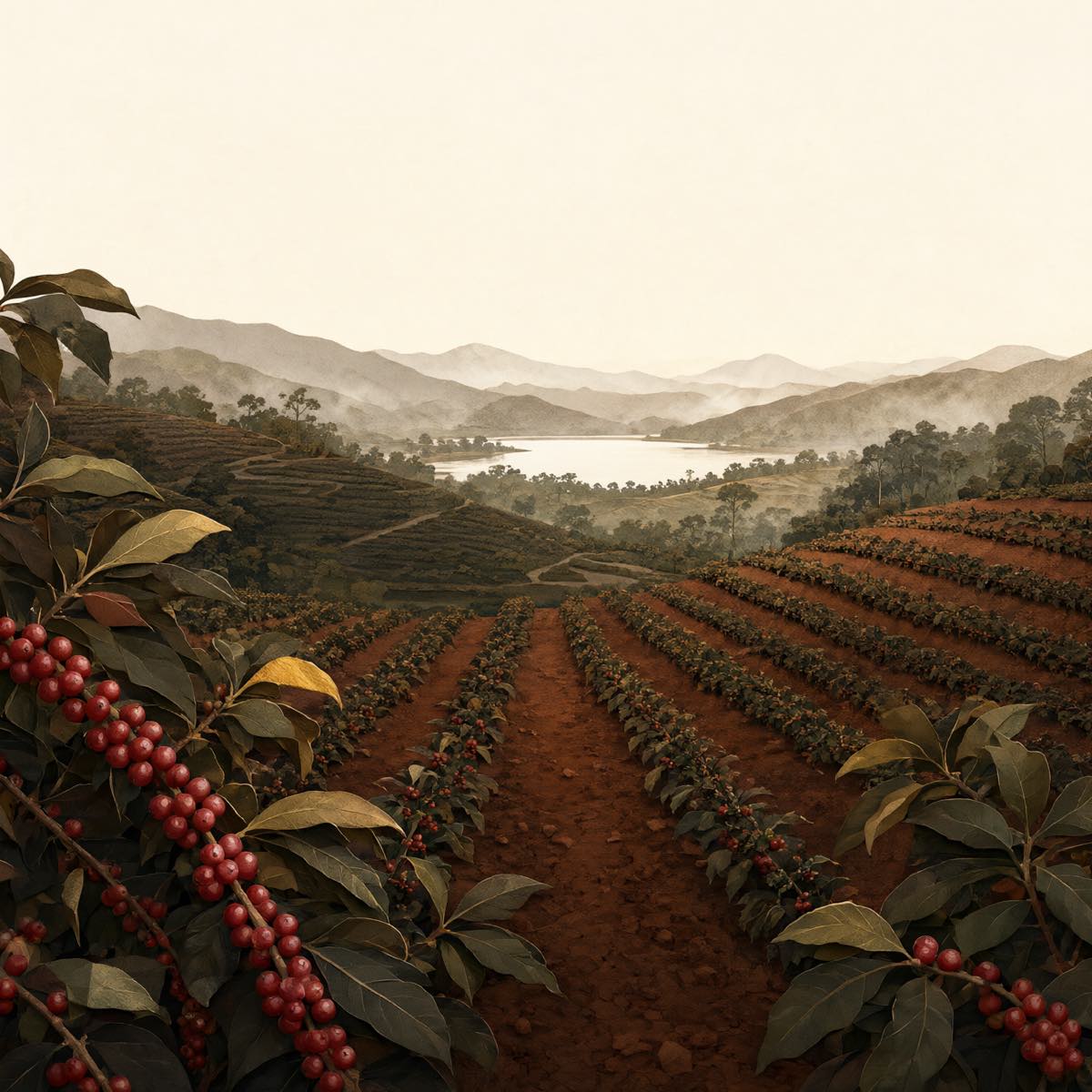
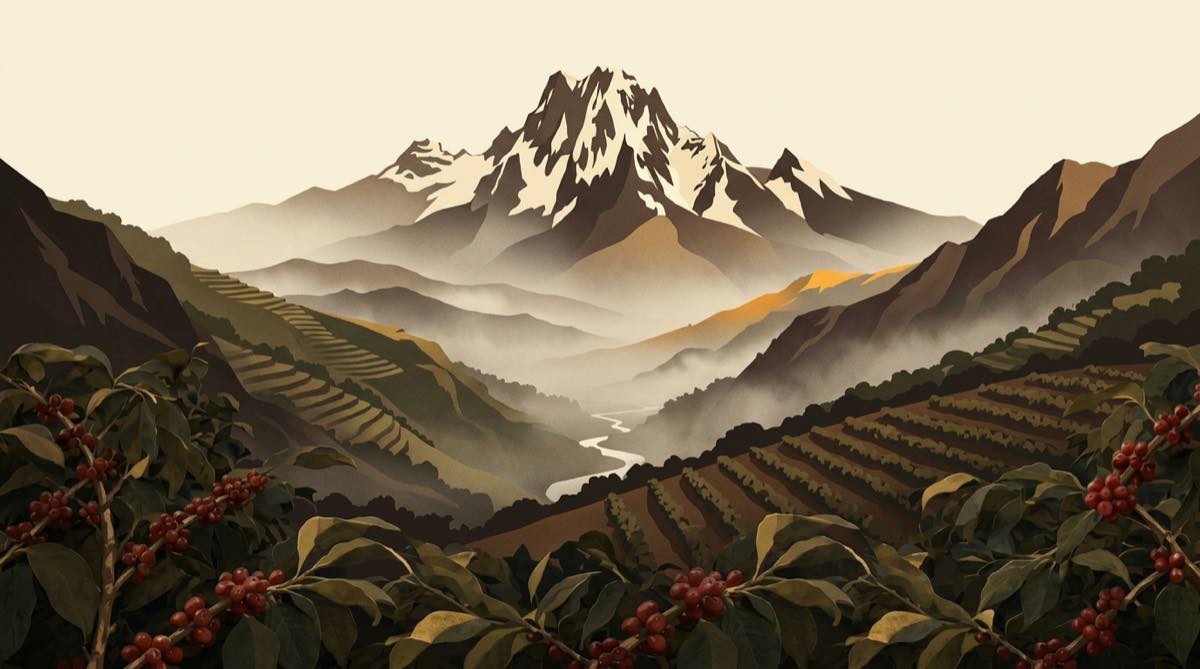
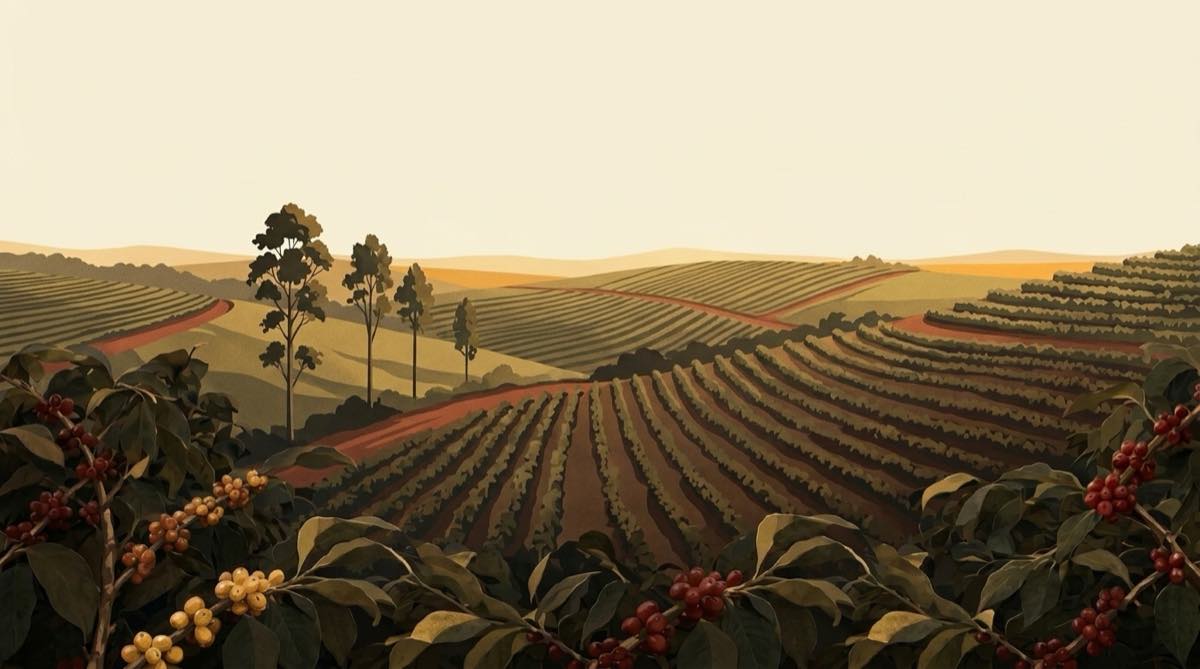
Around the Coffee Belt
Ten origins, one journey.
-

01 / 10 · Birthplace of coffee
Ethiopia
Ethiopia is the original home of Coffea arabica. Its forests still hold thousands of heirloom varieties, and its high, cool farms give complex and vibrant coffees.
- Floral
- berry
- citrus
- wine-like
- Altitude
- 1,500–2,200 m
- Main regions
- Sidama, Yirgacheffe, Guji, Harrar
- Acidity
- 4.8 / 5
- Body
- 2.2 / 5
-
02 / 10 · Vibrant and winey
Kenya
Kenyan coffee is famous for its bright acidity and blackcurrant, wine-like intensity, from SL28 and SL34 varieties grown on red volcanic soil around Mount Kenya.
- Blackcurrant
- berry
- citrus
- wine-like
- Altitude
- 1,400–2,100 m
- Main regions
- Nyeri, Kirinyaga, Murang'a, Kiambu
- Acidity
- 4.9 / 5
- Body
- 3.4 / 5
-
03 / 10 · Earthy and full-bodied
Indonesia
Indonesia's islands, Sumatra above all, are known for a heavy body, low acidity and earthy, herbal notes, largely from the local wet-hulled process.
- Earthy
- herbal
- spice
- full body
- Altitude
- 1,100–1,800 m
- Main regions
- Sumatra, Java, Sulawesi, Bali
- Acidity
- 1.6 / 5
- Body
- 4.8 / 5
-
04 / 10 · Bold and earthy
Vietnam
Vietnam is the world's second-largest coffee producer and the leader in Robusta, a species with a bold, heavy body and about twice the caffeine of Arabica.
- Bold
- earthy
- dark chocolate
- spice
- Altitude
- 500–1,000 m
- Main regions
- Central Highlands: Đắk Lắk, Lâm Đồng, Gia Lai
- Acidity
- 1 / 5
- Body
- 4.4 / 5
-
05 / 10 · Rich and complex
Guatemala
Guatemala's farms climb the volcanic slopes of Antigua and Atitlán and the high, dry mountains of Huehuetenango, giving rich and complex coffees with bright acidity.
- Chocolate
- caramel
- citrus
- spice
- Altitude
- 1,200–2,000 m
- Main regions
- Antigua, Huehuetenango, Atitlán, Cobán
- Acidity
- 3.8 / 5
- Body
- 3.7 / 5
-
06 / 10 · Bright and fruity
Honduras
Honduras is Central America's largest coffee producer, and its quality has risen fast: sweet, fruity coffees with a clean cup from high mountain farms.
- Citrus
- stone fruit
- honey
- smooth body
- Altitude
- 1,000–1,700 m
- Main regions
- Marcala, Copán, Santa Bárbara, Comayagua
- Acidity
- 3.6 / 5
- Body
- 2.8 / 5
-
07 / 10 · Clean and bright
Costa Rica
Costa Rica is known for careful processing, including its honey coffees, and for a clean, lively cup with sweet, fruity notes.
- Citrus
- honey
- stone fruit
- clean finish
- Altitude
- 1,200–1,800 m
- Main regions
- Tarrazú, Central Valley, West Valley
- Acidity
- 4.2 / 5
- Body
- 2.6 / 5
-
08 / 10 · Balanced and versatile
Colombia
Colombia grows coffee along three ranges of the Andes, with a harvest almost all year round. It is known for consistent quality and a balanced, sweet cup.
- Caramel
- chocolate
- nuts
- mild fruit
- Altitude
- 1,200–2,000 m
- Main regions
- Huila, Antioquia, Nariño, Cauca
- Acidity
- 3.2 / 5
- Body
- 3.2 / 5
-
09 / 10 · Organic and mild
Peru
Peru is one of the world's largest exporters of organic coffee, grown mostly on small farms high in the Andes, with a mild, sweet and balanced cup.
- Mild
- nutty
- chocolate
- light fruit
- Altitude
- 900–2,000 m
- Main regions
- Cajamarca, Amazonas, Junín (Chanchamayo), Cusco
- Acidity
- 2.8 / 5
- Body
- 2.4 / 5
-
10 / 10 · Smooth and nutty
Brazil
Brazil is the world's largest coffee producer. Most of its coffee is natural or pulped natural, giving a smooth body, low acidity and a sweet, nutty cup: a favourite base for espresso blends.
- Nuts
- chocolate
- caramel
- low acidity
- Altitude
- 700–1,300 m
- Main regions
- Sul de Minas, Cerrado Mineiro, Mogiana, Bahia
- Acidity
- 2 / 5
- Body
- 3.8 / 5
Climb the mountain
Why altitude changes the taste.
Move the slider, or drag the flag up the mountain. Higher farms are cooler, so the cherry ripens slowly and the bean grows denser, sweeter and brighter.
1,600 m
- Average temperature
- ≈ 17 °C
- Cherry ripening
- Acidity
The bean
Grown at this height
- Ethiopia
- Kenya
- Indonesia
- Vietnam
- Guatemala
- Honduras
- Costa Rica
- Colombia
- Peru
- Brazil
Mostly Robusta and lowland farms at this height.
Rule of thumb: about 0.6 °C cooler for every 100 m you climb. Grades follow Central American practice.
Taste finder
What do you love in a cup?
Choose a flavour on the wheel. The origins known for it light up on the map.
Fruity
Berries, stone fruit and wine-like depth. Often high-grown and natural processed.
5 origins known for this
Floral
Jasmine, bergamot and tea-like elegance, the signature of Ethiopia's heirloom coffees.
1 origin known for this
Citrusy
Lemon, orange and a sparkling, clean acidity from high, cool farms.
5 origins known for this
Chocolatey
Cocoa and dark chocolate, round and comforting. A classic for milk drinks.
5 origins known for this
Nutty
Almond, hazelnut and caramel, smooth and low in acidity. The base of many espresso blends.
3 origins known for this
Spicy and earthy
Clove, herbs and cedar with a heavy body. Think Sumatra and bold Robusta.
3 origins known for this
At a glance
All ten, side by side.
-
EthiopiaBirthplace of coffee
1,500–2,200 m
-
KenyaVibrant and winey
1,400–2,100 m
-
IndonesiaEarthy and full-bodied
1,100–1,800 m
-
VietnamBold and earthy
500–1,000 m
-
GuatemalaRich and complex
1,200–2,000 m
-
HondurasBright and fruity
1,000–1,700 m
-
Costa RicaClean and bright
1,200–1,800 m
-
ColombiaBalanced and versatile
1,200–2,000 m
-
PeruOrganic and mild
900–2,000 m
-
BrazilSmooth and nutty
700–1,300 m
Altitudes, regions and flavours are typical for each origin; every farm, variety and harvest is different. Illustrations are artworks, not photographs.
Choosing a green coffee? Ask Maryam.
Maryam is an SCA Green Coffee Professional and Q Arabica Grader. She helps roasters and cafés in the UAE choose origins, evaluate samples and buy with confidence.